
Pervaporation Membranes: A Sustainable Apporach for Solvent Dehydration
Updated: Jan 11
In chemical plants, refineries, and biofuel facilities, even small amounts of water in organic solvents can be detrimental to product quality, cause corrosion, or fail to meet process specifications. Traditional distillation often does not meet the requirements of energy efficiency, and it can’t break azeotropes. The pervaporation membrane process resolves these traditional challenges.
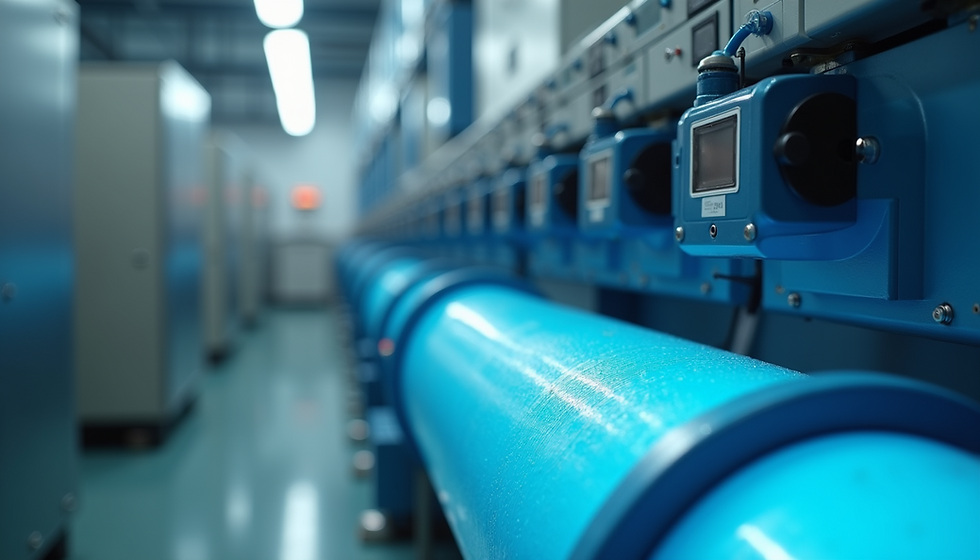
Pervaporation (PV) is a membrane-based separation process that selectively removes water (or volatile compounds) through a dense polymer or ceramic membrane using a vacuum on the downstream side. This essentially gives dry solvents, high-purity alcohols, and cost-effective dehydration at low temperatures.
Where Pervaporation Is Used?
Pervaporation can be used in following key areas:
Dehydration of ethanol, isopropanol (IPA), butanol, and other biofuels to >99.5% purity
Recovery and purification of high-value solvents in pharmaceutical and fine-chemical plants
Removal of volatile organic compounds (VOCs) from wastewater streams
Breaking azeotropes in normal distillation units (e.g., ethanol–water, THF–water)
Hybrid processes with distillation or extraction to cut energy use by 30–70%
Pervaporation could be useful in many of the unit operations of various industries, including chemicals, pharma, sugar, distilleries, wineries, and biofuel.
Types of Pervaporation Membranes and Selection Criteria
There are several pervaporation membrane options:
Hydrophilic polymeric membranes (PVA, PEBAX, polyimides-based); suitable for water removal
Organophilic (hydrophobic) membranes (PDMS, PEBA, polyurethanes, zeolite-filled); suitable for the removal of organics from water
Inorganic/ceramic membranes (zeolite NaA, silica, T-type); for high tolerance to high temperature/acidity
Thin-film composite (TFC) hollow fiber or flat-sheet membranes, suitable for high capacities due to improved flux and selectivity
Mixed-matrix membranes – next-gen option for fine separation and stability challenges. Combines polymers, CNT, graphene oxide and/or nanoparticles
GreenPebble Technologies LLP (GPT) is a manufacturer of both hydrophilic and organophilic proprietary polymeric composite membranes in hollow fibre configurations.
Key selection criteria for pervaporation membranes:
Feed composition and water content
Required permeate purity and flux rate
Chemical and thermal stability needed
Capital cost vs. operating cost balance
Proven long-term performance data
Pervaporation Membrane Suppliers
GreenPebble Technologies LLP designs, manufactures and deploys its proprietary hollow-fiber based composite SEPIONTM PV membranes.
Advantages and Limitations of Pervaporation Technology
Advantages
Energy savings of 40–70% compared to azeotropic distillation
Operates at relatively lower temperatures of 70-80 °C. Gentle on heat-sensitive compounds
Simple operation and installation. Easy scale-up and retrofit
No secondary waste generation
Lower operational footprint
Very high final purity (>99.9% possible)
Disadvantages
Higher membrane replacement cost
Fouling risk with suspended solids or heavy organics
Fewer suppliers and service providers
Current Challenges and Future Opportunities
Challenges
Reducing membrane cost while reducing life cycle costs
Improving tolerance to acids and chlorine
Scale-up of PV modules economically
Opportunities
Integration with biorefineries for SAF (sustainable aviation fuel)
Hybrid pervaporation for resource recovery at the waste source
Advanced membrane materials promising higher flux and selectivity
Case Studies
GreenPebble Tech has successfully pilot tested 10000 L/day IPA dehydration from 63% to 94%.
Is Pervaporation Right for Your Plant?
If you are looking for a sustainable solution for solvent dehydration, azeotrope breaking, or biofuel purification, pervaporation will most likely resolve your concerns with the lowest total cost of ownership.
We offer SEPIONTM pervaporation membranes that are robust and reliable.
Are you ready to evaluate pervaporation for your facility? Contact our experts for a free feasibility study and CAPEX/OPEX estimate tailored to your stream.
Frequently Asked Questions (FAQs)
1. What is the pervaporation process?
Pervaporation is a membrane process that separates liquid mixtures by partial vaporization through a dense, selective membrane, driven by vacuum on the permeate side.
2. How does pervaporation differ from distillation?
It works at lower temperatures, breaks azeotropes easily, and uses 40–70% less energy for dehydration tasks.
3. Which industries use pervaporation most?
Bioethanol, pharmaceuticals, fine chemicals, petrochemical solvent recovery, distilleries, wineries and wastewater VOC removal.
4. Can pervaporation reach 99.9% ethanol purity?
Yes. Pervaporation can achieve 99.5–99.95% ethanol from 92–95% feed.
5. What is the energy consumption of pervaporation?
Typically 0.8–2.5 MJ/kg of water removed vs. 5–8 MJ/kg for azeotropic distillation.
6. Is fouling a big problem in pervaporation?
It is highly recommended to install rigorous prefiltration to eliminate solids from entering the pervaporation system.
7. Can pervaporation be retrofitted into existing plants?
Yes. The modular skid design makes integration with the existing setup pretty straightforward.


Comments